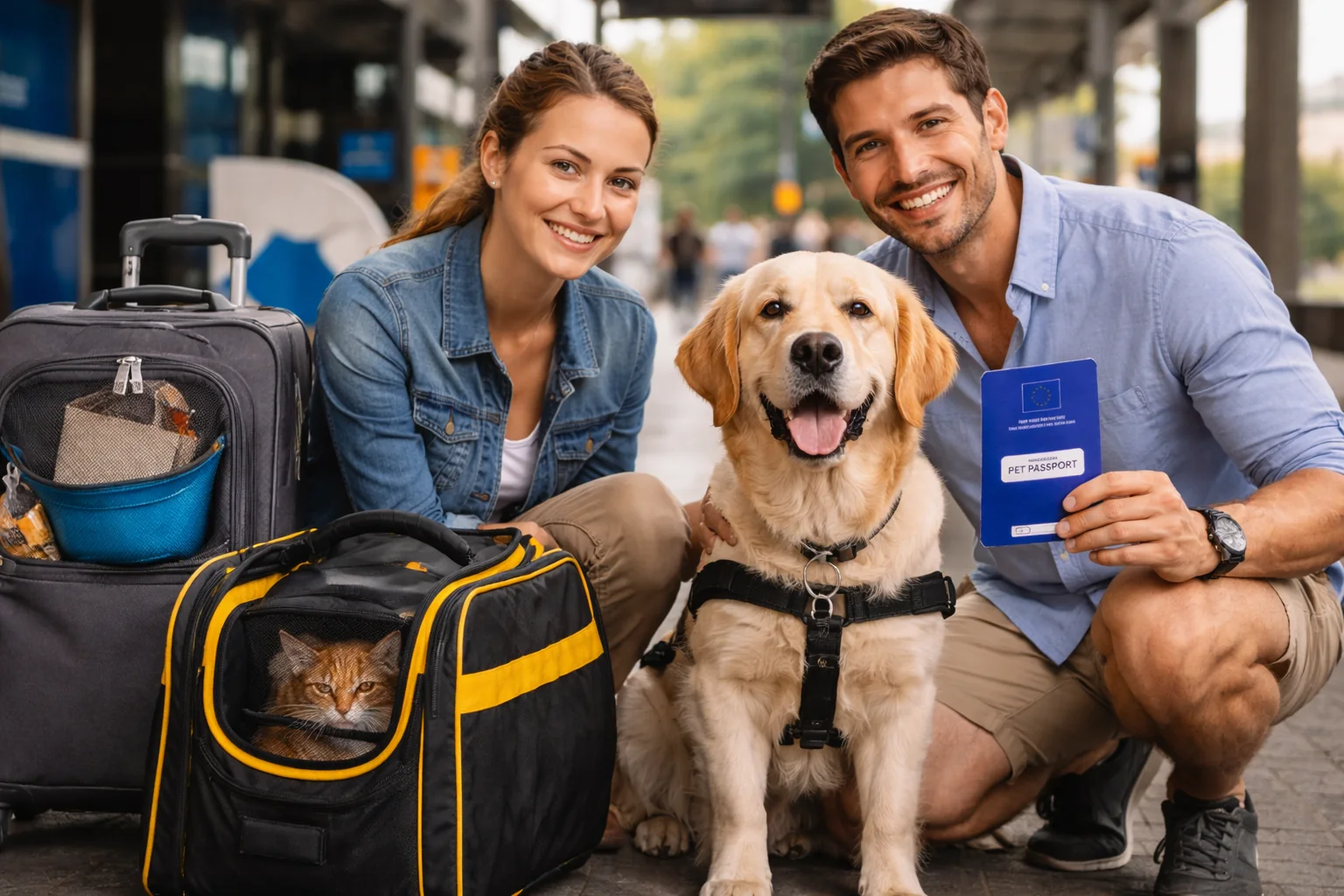

Traveling with a pet requires careful planning. To choose bus companies that allow dogs or cats describes the first step. A reliable plan starts with the fact that carriers have the right to refuse transport if you don’t have the necessary documents or a carrier, or if the animal exceeds the established weight and size limits, so verify you review all the rules.

What to Check Before Booking?
Rules can be different by carrier and route, so check them first. an animal must be vaccinated and microchipped - these are mandatory requirements that ensure safety and traceability to travel abroad. Entry into EU countries is not permitted without a rabies vaccination.
it’s a good idea to check before the trip what pet-friendly bus companies charge and compare those prices with the level of service to ensure a comfortable trip. It can help travellers choose the most comfortable option for you and your pet.
How Do Companies Formulate Their Pet Transportation Policies?
Companies develop animal transport policies by considering a range of factors. First and foremost, safety: the rules must ensure proper care and treatment of animals during transport. For first-time visitors, environmental factors, such as temperature, ventilation, and transport conditions, are also crucial, and all of these must be clearly specified. A separate section is dedicated to emergency response protocols, as these are what help minimize risks.
A robust policy reduces the likelihood of problems and builds trust among customers who use specialized services. It must comply with current legislation and industry standards to avoid legal risks. For practical trip planning, transportation specialists analyze potential hazards - from vehicle malfunctions to environmental factors or human error and develop practical solutions to address them. Such rules provide a real guarantee of a safe and controlled journey for the animals.
Small Dogs, Service Dogs, and Large Animals: Travel Policy Comparison
Traveling with a dog by bus may vary depending on the kind of animal. Compare your pet's characteristics with the table below.
| Category | Terms of Carriage | Some of Documents | Additional Requirements |
| Small Dogs (up to 10 kg) | Pets are allowed in the cabin only in a carrier or container with an absorbent bottom | Veterinary passport, vaccination certificate | The carrier must be closed; the animal must not disturb other passengers |
| Service Dogs | Always allowed in the cabin, even on international flights | Documents confirming the animal’s status as a service animal | A leash and muzzle are required, but a carrier is not necessary |
| Large Animals (over 10 kg) | Prohibited on most international flights; on domestic flights, they are allowed only in the cargo hold or in a separate carrier | Veterinary documents, vaccinations, certificates | Muzzle, leash, and sometimes a special carrier |
remember that the rules listed above are not universal. Some bus companies avoid allow pets on board at all.
Checklist for Dog Owners
It’s impossible to plan a trip with a dog or cat on the spur of the moment without any preparation. Travellers will find a few essential steps travellers should take:
- obtain documents certifying the animal’s health;
- purchase a carrier and get your pet used to it;
- stock up on food, dishes, and hygiene supplies;
- check the requirements of the carrier and the destination country.
you’ll need to prepare special documents when plan to travel to EU countries. Regulations are subject to change, so it’s essential to check the latest information before each trip.


Comments
No comments yet.