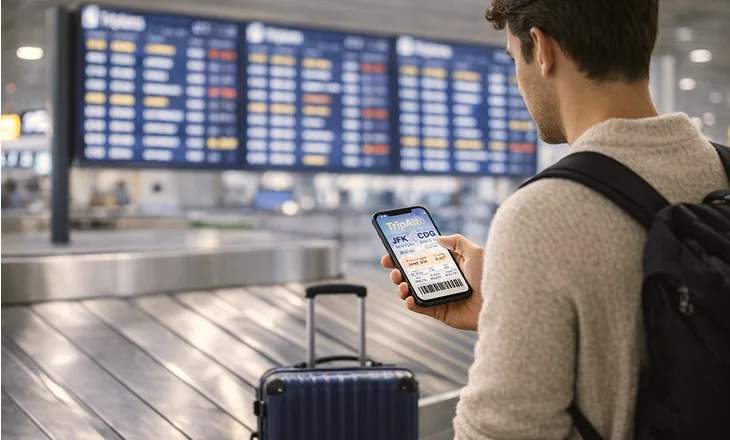

This is not always possible to find a direct flight to your desired destination. What should you do in such cases? In real-world use, check what a self-transfer flight means, plan everything correctly, and wait for the date of your trip.

What is a Self Transfer Flight?
A self-transfer is a trip made up of separate tickets that are not connected. After arrival, the next step is to leave the control zone, collect your luggage, and check in again. From a traveller’s perspective, it may seem complicated, but it opens up more opportunities, such as favorable prices, flexible routes, and individual plans. Such flights require attention, as self-transfer risks include delays, long layovers, and additional hassle. However, with proper preparation, they become a convenient way to travel.
Types of Transfer Flight
Before preparing for a flight with transfers, the next step is to understand the different types of transfers. A transfer on a single ticket means that all segments are combined into a single trip. For first-time visitors, check-in is done for the entire route at once, baggage is automatically transferred, and in case of a delay, the airline itself resolves the transfer issue.
When tickets are issued separately, the situation changes. Passengers receive their baggage, re-check in, and go through security again. In the event of a delay, the carrier is not liable, so the next step is to allow a large time buffer, usually several hours.
Self Transfer VS Protected Connection
A transfer with a single ticket and an independent transfer are fundamentally different. In the first case, all segments are combined, the airline is responsible for baggage and connections, and the passenger checks in only once. In the event of a delay, the carrier is obliged to rebook the passenger on another flight or to compensate them for their expenses.
An independent transfer consists of separate tickets. Here, the responsibility lies with the passenger: baggage must be collected and checked in again, check-in must be done separately, and compensation is only possible for each individual flight. For first-time visitors, this option is often cheaper and more flexible, but requires more planning and time.
Step-by-Step Self-Transfer Airport Procedures
Independent transfers require careful preparation. Tickets are issued separately, so airlines are not jointly liable. For practical trip planning, this means that you must check in separately for each flight and collect and re-check your self-transfer baggage. The steps are as follows:
- First, collect your luggage at the baggage claim area.
- Then proceed to the check-in counter for your next flight and check your luggage again.
- After that, go through security and head to your new gate.
Check the visa requirements for all countries on your itinerary before the trip and clarify the rules for transit visas. In some countries, they are required even for short layovers. In real-world use, a sensible approach is to submit your documents before the trip, using official sources. Keep digital and paper copies of your passport, visas, and tickets handy.
How to Plan Self-Transfer Safely?
- Correctly calculated transfer time contributes to a successful trip. In practice, it depends on various factors:
- Transferring between terminals at large airports can take up to an hour, especially if the next step is to go through passport control or customs.
- When connecting independently on separate tickets, it is better to allow at least 3-4 hours.
- The season and time of day affect queue length; during high season and rush hour, checks take longer.
- Traveling with children takes longer, usually another 30-40 minutes.
it helps to remember the laws that protect passengers in the EU. If a flight is canceled, travellers are entitled to accommodation, a change of route under comparable conditions, and a refund of the ticket price. However, for separate ticket connections, these guarantees apply only to segments issued by a specific airline.
Self-Transfer Travel Insurance Preparation
Flight insurance can be purchased as an additional service to protect your tickets or as comprehensive travel insurance. The scope of coverage: travel insurance offers more guarantees and options describes the main difference. It provides financial protection and support in unforeseen situations during your trip. If your connection on separate tickets is missed, the airline is not responsible for your flight, and travellers will have to buy a new ticket yourself, but insurance helps reduce costs. It reduces anxiety, provides confidence, and covers unexpected events.
If your luggage is lost, insurance will cover the cost of essential items or the cost of new clothes. In case of illness or injury, it will pay for treatment, hospitalization, and medication.
How to Prevent Missed Connections on Separate Tickets?
Missed connections are most often caused by insufficient information and an incorrect assessment of the minimum connection time for self-transfer. Immediately after landing, check the gate on the display board or in the app, as it may change. For first-time visitors, navigation in large airports is usually duplicated in English, and maps and mobile services make it easier to find directions. When changing terminals, travellers should clarify before the trip how to get there, whether by shuttle or train.
Passport and customs control can take from ten minutes to an hour, so allow extra time. Travellers will find often separate queues for families with children, which makes the process easier. travellers should remember the self-transfer connection time, especially if tickets are issued separately. avoid linger in shops or cafes before finding the right gate.
Why Travelers Choose Self-Transfer Flights?
Different airlines and booking platforms often offer lower prices for individual flight segments than for a single ticket. Sometimes it is advantageous to combine a long-haul flight with a major carrier with a short flight with a budget airline to reduce the overall cost. For practical trip planning, this strategy lets you use premium tickets when bonuses and comfort are important, and save money on short segments.
Route flexibility makes it possible to add a stopover for a few hours or days and see the city without complicated multi-segment tickets. In some cases, it is convenient to fly into one airport and fly out of another, especially if there are several airports in the city. A reliable plan starts with the fact that that is why travellers should consider the best airports for self-transfer, where transfers are easier and faster. while organising your route, it is also worth considering self-transfer options between different airports in the same city when your flight involves using multiple airports. This opens up more possibilities, but requires careful timing.

Comments
No comments yet.