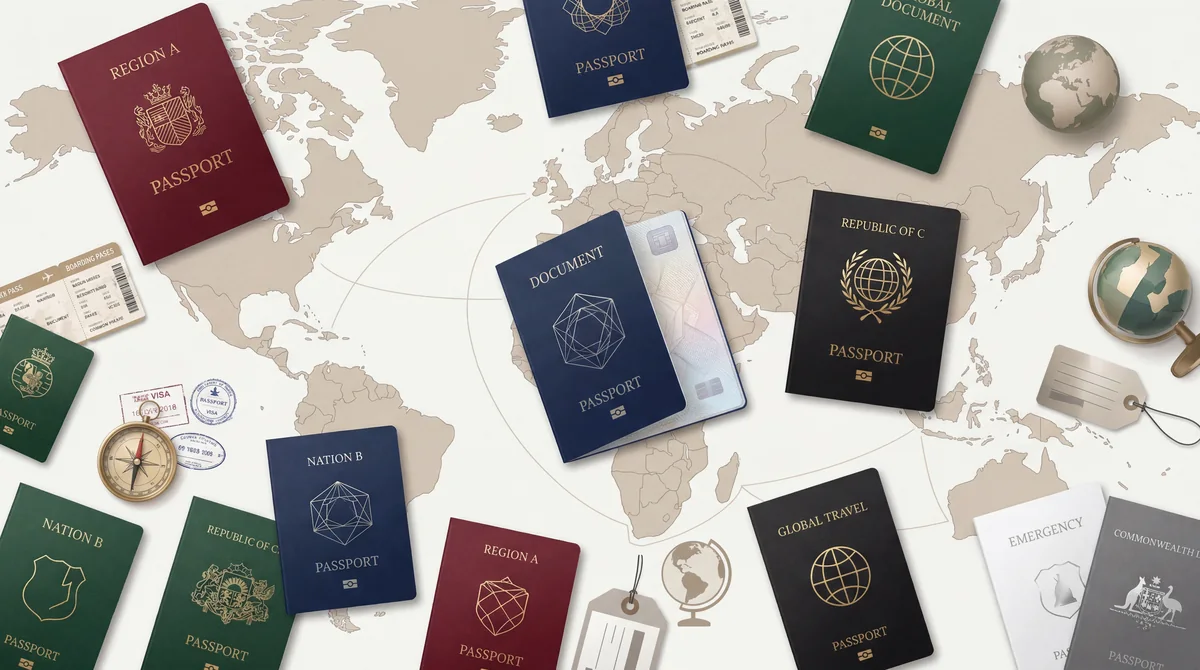

Passports from different countries most often come in four basic colors: black, blue, green, and red. Each country chooses the design of its passport based on its own traditions and aesthetic preferences. In real-world use, many travellers wonder, “What do passport colors mean?”, believing that the color of the cover affects travel opportunities, but this is just a common myth. In practice, the color is purely a design element and does not determine travel rules.

What Do Different Passport Colors Mean?
If a country is independent, it can choose any color for its passport. It functions as why documents from different countries vary in color. Usually made with cultural, political, and practical factors in mind describes the decision. for instance, European Union countries prefer burgundy, emphasizing their common membership in the union. however, countries with blue passports, such as the United States or Ukraine, use this shade as a symbol of openness and modernity, as well as for practical reasons of convenience and recognizability.
Check the passport color of every country
Interactive Passport Color Atlas
Pick a country directly on the SVG map or from the live list. Search, filter by passport color group and compare how passport covers differ around the world.
Green Passport Meaning
In many Muslim countries, passports are green, a color traditionally considered special and revered. This is associated with the Prophet Muhammad and symbolizes eternity. In real-world use, this shade is also widespread in West African countries such as Nigeria, Côte d'Ivoire, Burkina Faso, Ghana, and Senegal, as well as among members of the Economic Community of West African States (ECOWAS). Holders of such documents are entitled to visa-free travel to countries within the Schengen area.
Countries with Green Passports
- 🇸🇦 Saudi Arabia
- 🇹🇲 Turkmenistan
- 🇩🇿 Algeria
- 🇧🇫 Burkina Faso
- 🇨🇲 Cameroon
- 🇨🇫 Central African Republic
- 🇹🇩 Chad
- 🇰🇲 Comoros
- 🇨🇮 Côte d'Ivoire (Ivory Coast)
- 🇪🇬 Egypt
- 🇬🇦 Gabon
- 🇬🇲 Gambia
- 🇬🇭 Ghana
- 🇬🇳 Guinea
- 🇬🇼 Guinea-Bissau
- 🇱🇸 Lesotho
- 🇱🇷 Liberia
- 🇲🇱 Mali
- 🇲🇷 Mauritania
- 🇳🇪 Niger
- 🇳🇬 Nigeria
- 🇸🇱 Sierra Leone
- 🇹🇬 Togo
- 🇿🇲 Zambia
- 🇿🇼 Zimbabwe
- 🇦🇿 Azerbaijan
- 🇧🇩 Bangladesh
- 🇮🇩 Indonesia
- 🇵🇰 Pakistan
- 🇲🇽 Mexico
- 🇸🇧 Solomon Islands
- 🇹🇴 Tonga
- 🇻🇺 Vanuatu
- 🇻🇦 Vatican City
Red Passport
Red passports are among the most common colors worldwide. They are used in Monaco, Malaysia, Japan, Sweden, Italy, Germany, France, and Denmark. In some cases, the scarlet hue of the document reflects the state's communist past or present. however, this color is often associated with revolutionary symbolism and the spirit of change, which shapes a particular perception - this is how the red passport's meaning is revealed in a historical and political context.
Countries with Red Passports
- 🇦🇹 Austria
- 🇧🇪 Belgium
- 🇧🇬 Bulgaria
- 🇨🇾 Cyprus
- 🇨🇿 Czech Republic
- 🇩🇰 Denmark
- 🇪🇪 Estonia
- 🇫🇮 Finland
- 🇫🇷 France
- 🇩🇪 Germany
- 🇬🇷 Greece
- 🇭🇺 Hungary
- 🇮🇪 Ireland
- 🇮🇹 Italy
- 🇱🇻 Latvia
- 🇱🇹 Lithuania
- 🇱🇺 Luxembourg
- 🇲🇹 Malta
- 🇳🇱 Netherlands
- 🇵🇱 Poland
- 🇵🇹 Portugal
- 🇷🇴 Romania
- 🇸🇰 Slovakia
- 🇸🇮 Slovenia
- 🇪🇸 Spain
- 🇬🇪 Georgia
- 🇲🇩 Moldova
- 🇷🇺 Russia
- 🇧🇴 Bolivia
- 🇨🇴 Colombia
- 🇪🇨 Ecuador
- 🇵🇪 Peru
- 🇧🇭 Bahrain
- 🇰🇭 Cambodia
- 🇨🇳 China
- 🇮🇷 Iran
- 🇯🇵 Japan
- 🇲🇾 Malaysia
- 🇲🇻 Maldives
- 🇲🇳 Mongolia
- 🇲🇲 Myanmar
- 🇳🇵 Nepal
- 🇵🇭 Philippines
- 🇶🇦 Qatar
- 🇸🇬 Singapore
- 🇹🇭 Thailand
- 🇹🇱 Timor-Leste
- 🇹🇷 Türkiye
- 🇺🇿 Uzbekistan
- 🇬🇶 Equatorial Guinea
- 🇪🇹 Ethiopia
- 🇸🇳 Senegal
- 🇸🇨 Seychelles
- 🇦🇱 Albania
- 🇦🇩 Andorra
- 🇲🇨 Monaco
- 🇲🇪 Montenegro
- 🇲🇰 North Macedonia
- 🇳🇴 Norway
Blue Passport Meaning
Associated with the concept of the “new world” and is characteristic of countries in north and south america, the caribbean community, and australia and oceania describes the blue passport cover. Another version explains the choice of this shade by noting that many of these countries are bordered by oceans, and that the color symbolizes the sea. For practical trip planning, venezuela, where the red passport reflects its membership in the andean community of nations - a good example of how passport colour meaning is interpreted in different ways describes the exception.
The dark blue US passport only appeared in 1976, in honor of the country's 200th anniversary and to match the colors of the national flag. Before that, the document came in black, green, and several shades of red, and the first passport in 1918 was even the color of butter. In real-world use, among the most recent examples is the passport of South Sudan: the country only became independent in 2011 with US support, so it is not surprising that its blue document with a coat of arms resembles the American one. All this shows how much passport colors by country can differ.
Countries with Blue Passports
- 🇦🇬 Antigua and Barbuda
- 🇧🇸 Bahamas
- 🇧🇧 Barbados
- 🇧🇿 Belize
- 🇨🇦 Canada
- 🇨🇷 Costa Rica
- 🇨🇺 Cuba
- 🇩🇲 Dominica
- 🇩🇴 Dominican Republic
- 🇸🇻 El Salvador
- 🇬🇩 Grenada
- 🇬🇹 Guatemala
- 🇭🇹 Haiti
- 🇭🇳 Honduras
- 🇳🇮 Nicaragua
- 🇵🇦 Panama
- 🇰🇳 Saint Kitts and Nevis
- 🇱🇨 Saint Lucia
- 🇻🇨 Saint Vincent and the Grenadines
- 🇺🇸 United States of America
- 🇦🇷 Argentina
- 🇧🇷 Brazil
- 🇨🇱 Chile
- 🇬🇾 Guyana
- 🇵🇾 Paraguay
- 🇸🇷 Suriname
- 🇺🇾 Uruguay
- 🇻🇪 Venezuela
- 🇧🇯 Benin
- 🇧🇼 Botswana
- 🇧🇮 Burundi
- 🇨🇻 Cape Verde
- 🇨🇩 Democratic Republic of the Congo
- 🇩🇯 Djibouti
- 🇪🇷 Eritrea
- 🇸🇿 Eswatini
- 🇰🇪 Kenya
- 🇱🇾 Libya
- 🇲🇺 Mauritius
- 🇲🇿 Mozambique
- 🇷🇼 Rwanda
- 🇸🇹 Sao Tome and Principe
- 🇸🇴 Somalia
- 🇸🇸 South Sudan
- 🇸🇩 Sudan
- 🇹🇿 Tanzania
- 🇺🇬 Uganda
- 🇧🇾 Belarus
- 🇧🇦 Bosnia and Herzegovina
- 🇭🇷 Croatia
- 🇮🇸 Iceland
- 🇱🇮 Liechtenstein
- 🇸🇲 San Marino
- 🇺🇦 Ukraine
- 🇬🇧 United Kingdom
- 🇦🇺 Australia
- 🇫🇯 Fiji
- 🇰🇮 Kiribati
- 🇲🇭 Marshall Islands
- 🇫🇲 Micronesia
- 🇳🇷 Nauru
- 🇵🇼 Palau
- 🇵🇬 Papua New Guinea
- 🇼🇸 Samoa
- 🇹🇻 Tuvalu
- 🇦🇫 Afghanistan
- 🇦🇲 Armenia
- 🇧🇹 Bhutan
- 🇮🇳 India
- 🇮🇶 Iraq
- 🇮🇱 Israel
- 🇯🇴 Jordan
- 🇰🇿 Kazakhstan
- 🇰🇼 Kuwait
- 🇰🇬 Kyrgyzstan
- 🇱🇦 Laos
- 🇱🇧 Lebanon
- 🇰🇵 North Korea
- 🇰🇷 South Korea
- 🇦🇪 United Arab Emirates
- 🇻🇳 Viet Nam
- 🇾🇪 Yemen
Countries with Black Passports
Black passports are among the rarest in the world. Malawi, Tajikistan, the Dominican Republic, and Trinidad and Tobago have chosen this color. A reliable plan starts with the fact that they have been joined by New Zealand, where black has cultural significance and is associated with national identity, known for the All Blacks team. This option is considered practical: the dark cover highlights the countries' coats of arms and effectively hides signs of wear, reflecting the black passport meaning.
White and Gray Passport Meaning
The meaning of passport color varies, especially for white and gray passports. They are extremely rare and are issued only in special cases. For practical trip planning, a white document can have different meanings depending on the country; for instance, in Canada, it is used as a temporary travel document when the main passport is lost, or an urgent trip is needed. Gray passport meaning is even more specific. They are used in the United States, mainly for government contractors.
Emergency Passport Color (US / Canada)
also to the passport colors list, there are urgent options. travellers can check more about them in the table below.
| Country | Emergency passport color | Reason for issuance | Validity period |
| United States | Temporary, simplified (usually dark blue, but may vary) | Urgent travel (death, illness, threat to the life of a close relative) | Short-term, requires replacement |
| Canada | White | Loss of passport, urgent travel | Temporary, until a new passport is obtained |
In the US, a temporary passport color meaning is a document for life-threatening situations, while in Canada, a white passport is used as an emergency travel document.
Can There Be Exceptions in Passport Colors?
Documents with light colors are perceived as a special sign requiring increased attention. Have you ever wondered about the light blue passport meaning? In practice, until recently, children's travel documents in Ukraine had a light blue cover, which was later replaced by the modern blue passport. In Sweden and the Netherlands, passengers who have lost their travel documents are issued a temporary pink passport, which emphasizes the unusual and noticeable nature of such designs.
Understanding the Most Influential Passport?
Usually understood as the number of countries its holder can visit without a visa, or the number of countries its holder can visit with a visa upon arrival describes the “power” of a passport.
The longer the list of destinations, the higher the value of the document:
- 179, and only 19 countries require a visa describes the most influential passport now belongs to the United Arab Emirates: its mobility index.
- At the other end of the spectrum is Afghanistan, with a score of 40.
- The US ranks eighth with a mobility score of 170, tied with Cyprus and the UK.
In terms of business opportunities, Ireland is considered the leader. This is part of the European Union but has retained its own immigration policy by not joining the Schengen area. For first-time visitors, citizenship can be obtained by birth, descent, marriage, special merit, or naturalization after five years of residence. An Irish passport provides visa-free access to 186 countries, which clearly demonstrates the diversity of passport colors worldwide and how the status of the document affects mobility. This is interesting to consider passport colors explained, as the shades of the covers and their symbolism often go hand in hand with the political and cultural characteristics of the states.
Passport Color Guide: Impact on Opportunities
Passport colors by country avoid in themselves determine the strength or status of the document. for instance, both the United Arab Emirates and Afghanistan use blue passports, but their travel capabilities differ dramatically. In practice, however, most of the passports at the top of the rankings are countries with red passports. The color of the cover reflects the state's geopolitical and economic ties, but does not guarantee freedom of movement. for instance, citizens of the United States, Ukraine, and Syria have passports of the same blue color, but the Syrian document is considered one of the weakest: it provides visa-free access to only about three dozen countries, while the American and Ukrainian passports offer significantly more opportunities.
More About the History of Passports
also to understanding passport colors and meanings, it would be useful to delve deeper into their history. One of the earliest references to passports is the Book of Nehemiah (circa 443 BC). In practice, the modern format of the document appeared only in the early 1980s: a multi-page booklet measuring 88×125 mm. The era of machine-readable passports began in 2010, with a built-in chip that stores biometric and personal information, including name, date of birth, and digital photographs and fingerprints. you have probably noticed that passport covers come in a broad range of colors when travel frequently and observe people at passport control. Not assigned to a specific category of countries, but its choice always has meaning and reflects political or cultural ties describes the color. That is why there is a kind of passport colour guide that helps explain how the shades of documents relate to history and diplomacy.
Here are a few illustrative examples:
- blue and red passports are the most common;
- a single color often symbolizes cooperation between states;
- in the European Union, the decision to use burgundy required the agreement of all nine members at the time, and discussions lasted several years.
Knowing this information broadens your understanding of passport colours and meanings.
Final Thoughts
Perceived as one of the symbols associated with a state's image describes the color of a passport. The design of the document itself is, to a certain extent, regulated by international standards, such as ICAO standards, which govern the structure and machine-readable elements. However, the choice of cover color remains up to each country and is determined by its political or cultural preferences.
Although there are many options, the EU passport color burgundy is not so common. No less interesting and reflects the unique characteristics describes the four main shades are the most popular, but there are also countries with green passports, whose history.
Leading positions in the passport color chart mean that their holders can access more countries without a visa, develop their businesses more freely, create a “fallback option” for themselves, and improve their quality of life. however, passport covers themselves have changed little over the decades. Some countries try to further diversify the design with internal elements. In Canada, the pages are decorated with images that appear under ultraviolet light, and in Finland, an animation of a moose “comes to life” when the pages are quickly turned. These details show that even while preserving traditional colors, countries are finding ways to emphasize the individuality of their documents


Comments
No comments yet.