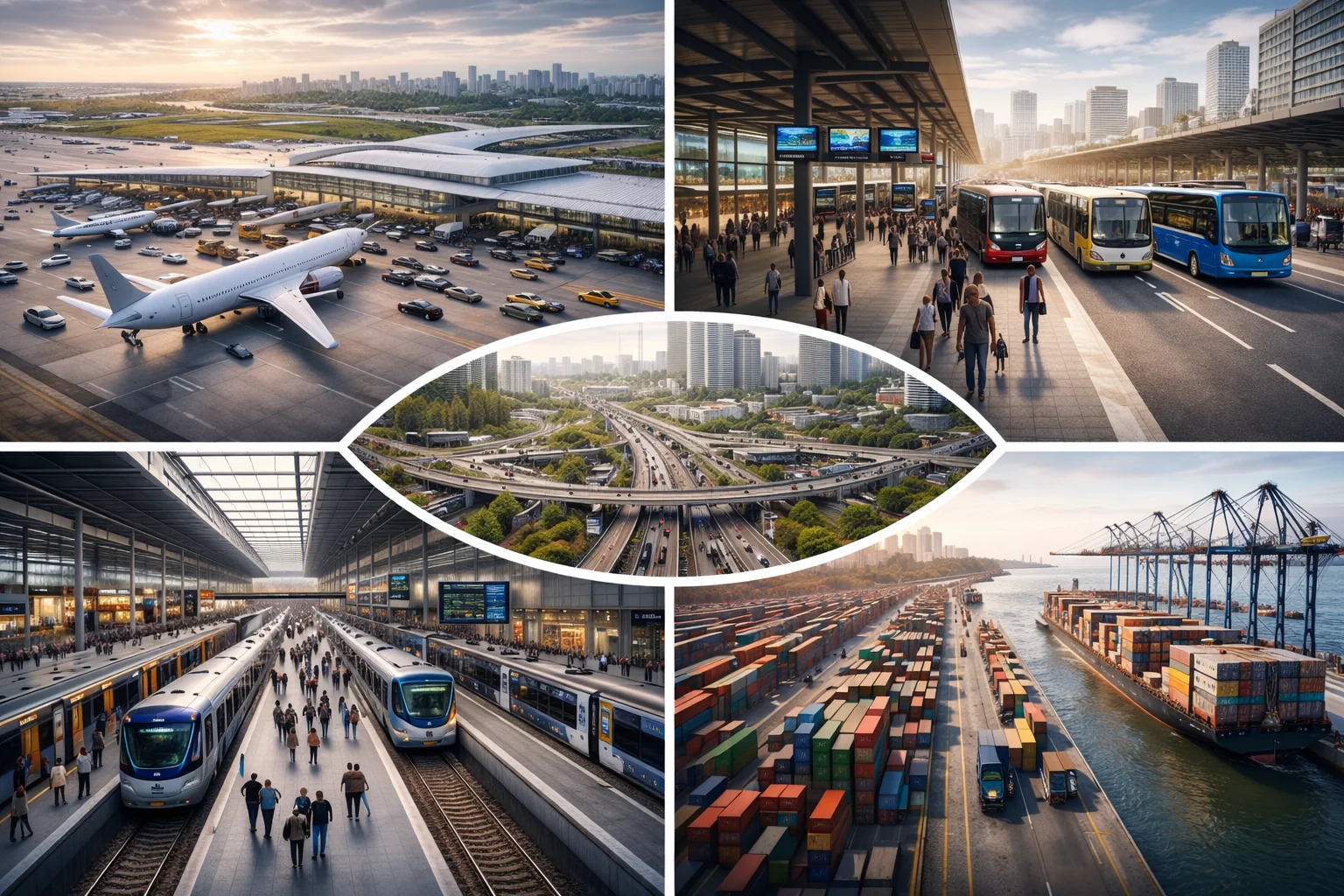

now, it’s hard to imagine any city without transportation. Hubs are a key component of the logistics system and serve as focal points for development. The key point is that they attract companies, create thousands of jobs, and transform small towns into major hubs. Without such hubs, transportation would descend into chaos, leading to long delays and higher costs. Learn more about what is a transit hub to understand the many functions this element of the transportation system performs.

Transportation Hub Meaning and Types
A transportation hub is a facility where different routes and modes of transportation converge, facilitating passenger transfers and cargo transshipment. Such a complex is designed to speed up transportation and make the system more convenient and cost-effective. For practical trip planning, a transportation hub?” is that it is an infrastructure center that connects roads, stations, and terminals into a single network describes the answer to the question “What.
By mode of transportation, they can be classified as follows:
- road transport - interchanges, bus stations, major road intersections;
- rail transport - stations, train stations, marshaling yards;
- air transport - airports and airport complexes;
- maritime and river transport - ports, terminals, and piers;
- multimodal - facilities where multiple modes of transport converge.
To reduce travel time and lower costs by ensuring the efficient movement of people and goods describes the main goal of the transportation hub.
Examples of Transportation Hubs: Airport, Train Station, Bus Station
Transportation hubs consist of various modes of transit. Airports serve multiple functions. The key point is that they bring passengers together in one place and connect flights with road, rail, and subway systems. Some serve as aviation hubs for airlines. Intermodal facilities include train stations, subway stations, and bus transportation hubs. Large multimodal centers are referred to as transportation or transit centers. In cities, the central station often combines the functions of a station and a hub.
Why are Hubs Useful for Travelers?
Transportation hubs make travel convenient and safe. They facilitate transfers between routes and modes of transportation. It allows the traveler to continue their journey without unnecessary delays. These hubs feature information boards and service centers where passengers can easily check schedules, gate assignments, and any schedule changes.
Passengers can wait for their flight or connection in comfortable areas with Wi-Fi, cafes, and shops. Additional services such as luggage storage, car rentals, and currency exchange are also available. In real-world use, all of this is complemented by a security system that ensures a safe journey.
Differences Between Hub, Terminal, Station, and Transfer Point
it’s worth learning about the differences between the various types to better understand how transportation hubs work.
| Term | Overview | Scope and Features |
| Hub | A central hub where different modes of transportation converge | Facilitates transfers between systems and speeds up the movement of passengers and freight |
| Terminal | Route endpoint | Used for departures and arrivals; often includes services and infrastructure |
| Station | Transport stop for boarding and alighting | Typically a local facility serving a single mode of transport |
| Transfer Point | Transfer point between routes | makes it possible to change lines or modes of transportation, but does not always connect different transit systems |
The integration of various transportation systems turns the hub into a strategic center that supports international routes and ensures their smooth operation.



Comments
No comments yet.